What Is Foley? How Everyday Film Sounds Are Made
· 5 min
In short: Footsteps, rustling coats and clinking cups in a film are rarely recorded on set. They are performed later by a Foley artist watching the scene, and the best work is the kind nobody notices.
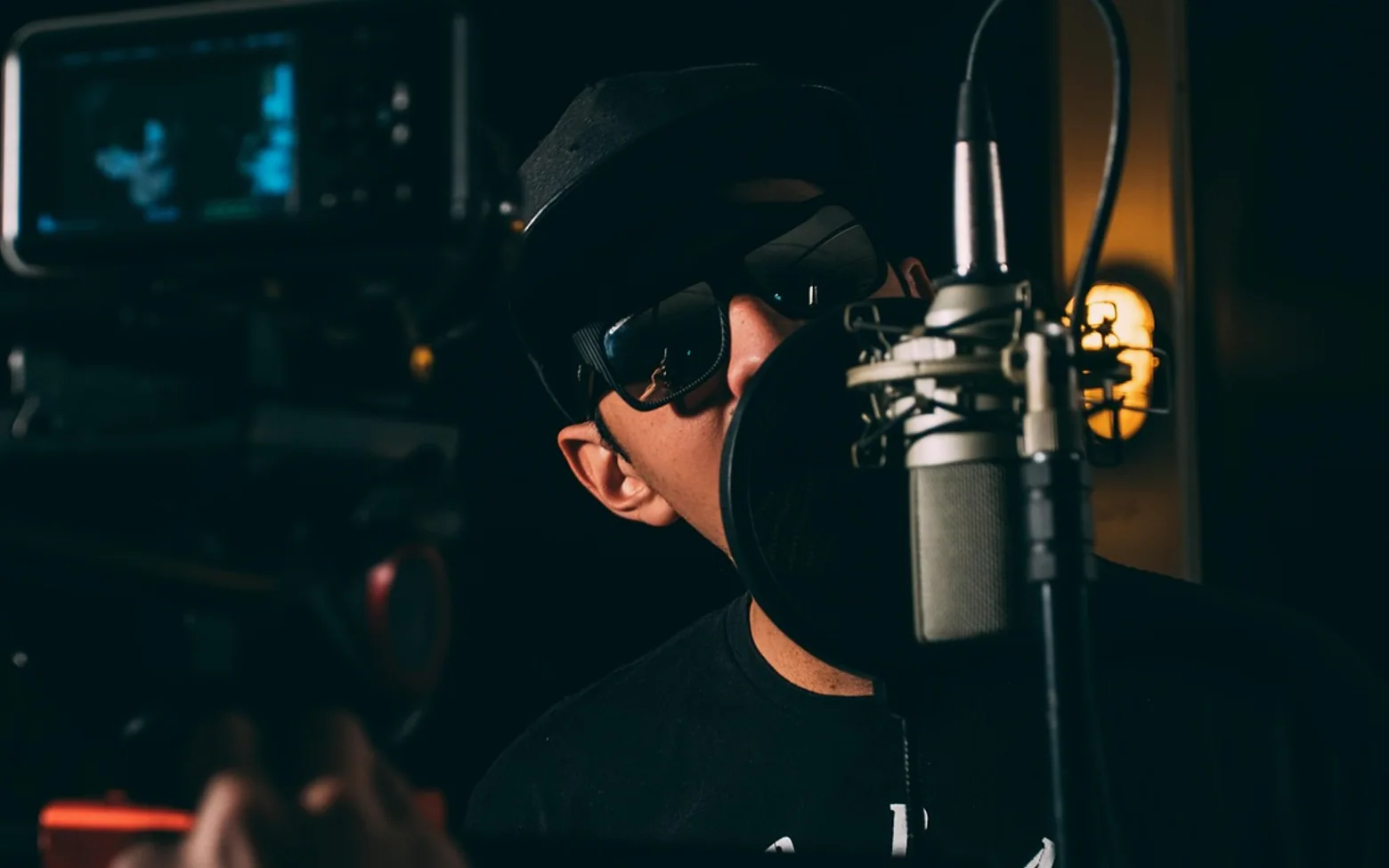
Foley is the sound of ordinary life added to a film after it has been shot. Footsteps on a staircase, the creak of a leather jacket, a cup set down on a saucer: in most films these noises were not captured on set but performed later in a studio by a Foley artist watching the scene and moving in time with the actors. The finished effect is meant to go unnoticed, which is exactly why so few viewers realise it is there.
Where the name comes from
The craft takes its name from Jack Foley, who worked at Universal when Hollywood was switching from silent pictures to sound at the end of the 1920s. Early microphones struggled to pick up much beyond dialogue, so he and his colleagues began recreating footsteps and other small noises on a stage while the film was projected in front of them. The method stuck, and his surname became the industry's word for it.
Why films need Foley at all
On a film set, the sound team's first priority is clean dialogue. Microphones are aimed at the actors, crews try to keep everything else quiet, and many background noises end up either too faint or too messy to use. A set may be built from plywood that sounds nothing like the stone castle it represents on screen. Generators, traffic and wind add their own problems.
There is also a practical reason linked to distribution. When a film is dubbed into another language, the original dialogue track is replaced, and any footsteps or rustles recorded alongside the voices vanish with it. Studios therefore prepare a separate music and effects track, often called the M&E, and Foley makes up a large part of what fills it.
The three kinds of Foley
Most Foley work falls into three broad groups, and recording sessions are often organised around them.
- Feet. Every footstep in the film, matched to the character's shoes, weight and mood. A nervous shuffle and a confident stride across the same floor should not sound alike.
- Moves. The quiet layer of clothing and body movement: a coat brushing a doorframe, a sleeve sliding over a table, someone shifting on a sofa.
- Specifics, or props. Individual objects handled on screen, such as keys, cutlery, paper, a door handle or a phone placed on a desk.
Inside a Foley stage
A Foley stage is a recording room built for making noise on purpose. The floor is usually divided into pits holding different surfaces, such as gravel, sand, concrete, wooden boards and tiles, so the artist can step from one to the next as a character crosses a location. Shelves and cupboards hold an odd collection of props: worn shoes, chains, kitchenware, umbrellas, bags of cornflour and anything else that once produced a useful noise.
Some of the best-known tricks rely on substitutes that sound more convincing than the real thing. Snapping celery can stand in for breaking bones, a leather pouch of cornflour squeezed in rhythm suggests footsteps in snow, and a pair of gloves flapped near the microphone becomes a bird taking off. Coconut shells clopped on a tray were a radio favourite for horses' hooves long before film crews borrowed them.
Who does what
| Role | Main job |
|---|---|
| Foley artist | Performs the sounds live while watching the picture, choosing shoes, surfaces and props. |
| Foley mixer | Places the microphones, records each pass and checks that timing and level suit the scene. |
| Foley editor | Cleans up the recordings and lines every sound up with the action, frame by frame. |
| Sound effects editor | Handles larger effects such as cars, explosions or weather, often from material recorded elsewhere. |
| Sound designer | Shapes the overall sonic character of the film, including sounds that do not exist in real life. |
How a session runs
- Spotting. The team watches the edited film and notes every moment that needs a sound.
- Cueing. Each sound becomes a cue on a list, grouped by character, scene and type.
- Performing. The artist acts out the cues in front of the screen, often recording one character's footsteps per pass.
- Editing. The editor nudges each recording into sync and removes stray noises.
- Mixing. The Foley tracks are balanced against dialogue, music and other effects in the final mix.
Foley compared with other sound work
Foley is easy to confuse with two neighbouring crafts. Sound effects libraries supply prerecorded material such as thunder, crowds or engines; they are useful for big, generic sounds but rarely match the exact movement of an actor's hand. ADR, short for automated dialogue replacement, is the process of rerecording spoken lines in a studio when the set recording cannot be used. Foley sits between the two: performed to picture like ADR, but focused on everything except the voices.
How to hear it when you watch
Once you know Foley exists, it becomes easier to pick out. Quiet indoor scenes are the best place to listen: a character pouring tea, turning a page or crossing a hallway. Headphones help, as does a decent sound setup in the living room. If most of your films arrive through internet television, a good stream carries those small details cleanly; this piece on watching sports, films and live channels over IPTV covers what to look for in a service. Large-format cinemas push the effect further still, as the comparison of IMAX and regular cinema screens explains.
Common questions
Is Foley still used now that microphones are better?
Yes. Modern microphones capture far more on set, but the reasons for Foley have not gone away: dialogue still comes first, sets still sound wrong, and foreign-language versions still need a complete effects track.
Can you try Foley at home?
It makes a satisfying hobby. A phone or small recorder, a quiet room softened with blankets and a handful of household objects are enough to begin. Adding sound to a short home video quickly shows how much the timing matters.
Does every film use it?
Most feature films and television dramas do, and so do animation and many video games, where every sound has to be created from nothing. Low-budget productions sometimes lean more on libraries. Either way, the sound team works from the same shot-by-shot plan as everyone else, which is why a storyboard often carries notes about footsteps, doors and other effects long before filming starts.
Making it stick
Ways to keep seasonal jobs from piling up
Ideas for turning a long list into a habit that lasts the whole year.
Tie jobs to dates you already know
Changing the clocks or the first school week makes a handy reminder for alarms, filters and descaling.
Keep supplies in one caddy
A single box with gloves, cloths, baking soda and vinegar means no hunting before you start.
Share the list
Pin it inside a cupboard door so everyone at home can tick off a task.
Stop at two
Doing two jobs and stopping keeps the routine pleasant enough to repeat next month.
Got a topic idea?
We read every message.