How to Choose the Right Rug Size
· 4 min
In short: A rug that is too small makes a room feel scattered, while the right size pulls furniture into one calm group. Measure the space, decide where the legs sit and you will choose with confidence.
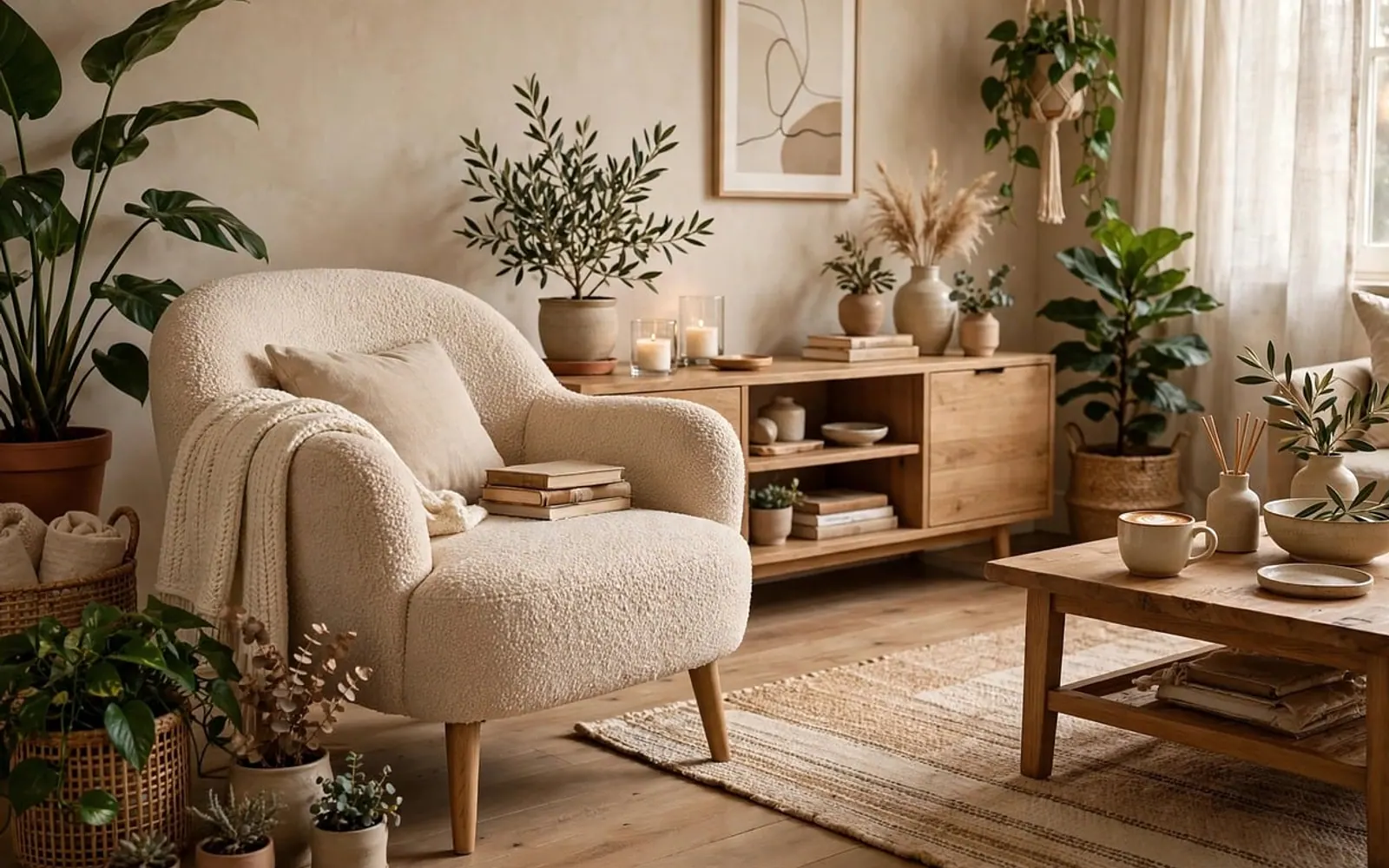
A rug can make a room feel finished or strangely unsettled, and size is usually the reason. The most common mistake is buying one that is too small: it floats in the middle of the floor like an island, and the furniture around it seems to drift apart. Getting the size right is less about following fixed numbers and more about understanding how a rug relates to the furniture standing on or around it.
Start with the furniture, not the floor
Before thinking about patterns or colours, decide which pieces the rug should connect. In a living room it is usually the sofa, chairs and coffee table. In a bedroom it is the bed and perhaps the bedside tables. In a dining room it is the table and chairs. The rug's job is to frame that group and define it as one zone.
Measure properly
- Arrange the furniture where it will actually stay.
- Measure the length and width of the furniture group, not the whole room.
- Leave a band of bare floor between the rug and the walls on every side, so the room still breathes.
- Mark the planned outline with painter's tape or lay down old sheets. Walk around it for a day or two before ordering.
Taping the outline is the most useful step of all, because it shows how the rug will meet doorways, radiators and walkways in a way that numbers alone cannot.
Living room layouts
| Layout | How the furniture sits | Best for |
|---|---|---|
| All legs on | Every leg of the sofa and chairs rests on the rug | Large rooms and open-plan spaces that need a defined seating area |
| Front legs on | Front legs on the rug, back legs on the floor | Most living rooms; it links everything without needing a huge rug |
| Coffee table only | Rug sits under the table, seats around it | Very small rooms, though it can look sparse |
The front-legs layout is a reliable default. It ties the seats together and still leaves room for a strip of floor around the edges.
Bedrooms
A bedroom rug is mostly about the first step in the morning. Rather than hiding it under the whole bed, many people place it so it begins a little below the bedside tables and extends beyond the foot and both sides of the bed. That way there is something soft underfoot wherever you get up. For a smaller room, two runners along each side of the bed are a practical alternative. Our guide on making a bed like a hotel pairs well with this step.
Dining areas
Here the rug must be larger than the table by enough that chairs stay on it when pulled out. If the back legs catch the edge every time someone sits down, the rug will soon curl and become a trip hazard. Pull a chair out as you would during a meal and measure from there. Low-pile or flat-woven rugs are easier to clean under a table than deep shaggy ones.
Hallways and entrances
Runners should be narrower than the hallway, leaving a visible strip of floor on each side, and they should stop short of doors so the door can open freely. At the entrance, a sturdy mat that catches grit protects the rugs further inside.
Shape and style
- Rectangles suit most rooms and follow the lines of sofas and beds.
- Round rugs soften square rooms, look good under round dining tables and help break up lots of straight lines.
- Layering a smaller patterned rug on top of a larger plain one adds character and lets you use a favourite small piece in a big room.
Lighting changes how a rug's colour reads in the evening, so it is worth checking samples under your own lamps; our look at modern chandeliers covers how a central fitting shapes the mood of a room.
Common mistakes
- Buying the smallest size to keep the cost down, then finding it looks lost.
- Placing a rug so it blocks a door from opening fully.
- Choosing a thick pile for a busy hallway or under a dining table.
- Forgetting a non-slip underlay on smooth floors.
Safety and care
Use a suitable anti-slip pad beneath rugs on wooden, tiled or laminate floors, especially in homes with small children or older relatives. Tape or replace corners that curl. Check the label before washing or spot cleaning, and vacuum regularly so grit does not wear the fibres. Rotating the rug every so often helps it wear evenly where sunlight and footsteps fall.
Measure the group, tape the outline, and trust what you see on the floor. The right size will look as though it was always meant to be there.
Making it stick
Ways to keep seasonal jobs from piling up
Ideas for turning a long list into a habit that lasts the whole year.
Tie jobs to dates you already know
Changing the clocks or the first school week makes a handy reminder for alarms, filters and descaling.
Keep supplies in one caddy
A single box with gloves, cloths, baking soda and vinegar means no hunting before you start.
Share the list
Pin it inside a cupboard door so everyone at home can tick off a task.
Stop at two
Doing two jobs and stopping keeps the routine pleasant enough to repeat next month.
Got a topic idea?
We read every message.
Rug planner: measure once, tape once
Pick the room, put in the measurements of the room and the furniture group, then choose how much bare floor you want showing at the walls. The planner shows the largest rug that keeps that band even and the smallest one your layout needs.
- Largest rug with an even border
- –
- Smallest rug for all legs on
- –
- What that means
- –
The guide gives no magic border number, so the band is yours to choose. Before ordering, mark the outline with painter's tape, walk around it for a day or two and check doors, radiators and walkways. Use a non-slip underlay on smooth floors.