The Heartbeat of Time: Understanding the Movement of Automatic Watches
· 3 min
In short: Hold an automatic watch to your ear and the soft, rapid ticking is easy to mistake for a battery at work. There is no battery. Every beat comes from energy the wearer…
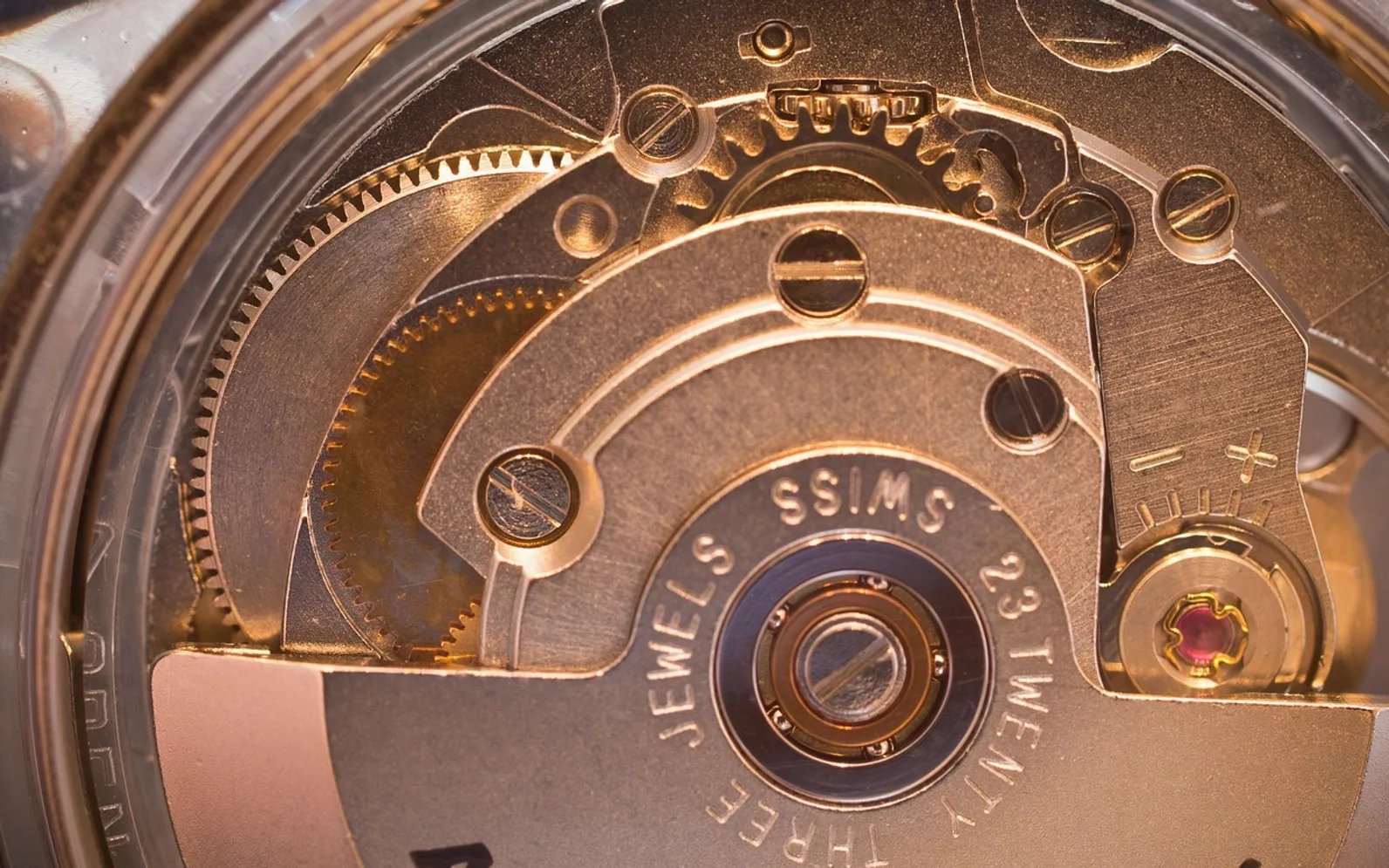
Hold an automatic watch to your ear and the soft, rapid ticking is easy to mistake for a battery at work. There is no battery. Every beat comes from energy the wearer supplied earlier, simply by walking, reaching for a cup or turning a steering wheel. The clearest way to understand these watches is to follow that energy from the moment it enters the case to the moment it moves the hands.
Stage one: the wrist does the winding
Behind the dial sits a half-moon of metal called the rotor. It is mounted on a pivot and swings whenever the wrist moves, a little like a pendulum that can travel all the way round. A set of reversing wheels converts that back-and-forth motion into steady turning in one direction, which is what the next part of the system needs. Nothing about this requires effort from the owner; normal daily movement is usually enough to keep things going.
Stage two: storing energy in a coiled spring
The turning motion tightens the mainspring, a long ribbon of steel wound inside a small drum known as the barrel. This is the watch's reservoir. A slipping clutch stops the spring from being overwound, so a busy day of wear cannot damage it. The amount of time a fully wound watch keeps running once it is taken off is called the power reserve. Many everyday automatics last somewhere around a couple of days off the wrist, while some designs run considerably longer; the exact figure depends on the movement.
Stage three: releasing it at a steady pace
A spring left to itself would unwind in a single rush. The clever part of the watch is the way it lets energy out in tiny, equal portions. Three components share the job:
- The gear train carries force from the barrel towards the regulating parts and, along the way, drives the hands at the correct ratios.
- The escapement, with its distinctive anchor-shaped lever and toothed wheel, locks and unlocks the gear train many times every second. Those releases are the ticks you hear.
- The balance wheel swings back and forth on a hair-thin spring at a consistent rhythm, setting the tempo for the escapement.
Together they turn a burst of stored power into the smooth sweep of the seconds hand. Watchmakers often describe the balance as the heartbeat of the movement, and it is easy to see why when a display caseback lets you watch it pulse.
Modern makers keep finding fresh ways to frame this old mechanism. A piece such as the Kataphrakt Hoplon shows how a self-winding heart can sit inside a strong, contemporary case design, giving people who like visible engineering something solid to wear every day.
Keeping an automatic running well
Mechanical movements reward a little attention. Small habits add up:
- If the watch has stopped after a few days in a drawer, give the crown some gentle turns before setting the time so the spring has a head start.
- Keep it away from strong magnets, such as speaker cabinets or magnetic phone mounts, which can affect timekeeping.
- Check the stated water resistance before swimming, and avoid working the crown while the watch is wet.
- Expect a mechanical watch to gain or lose a few seconds over a day; small variations are part of its character rather than a fault.
- Ask a qualified watchmaker about servicing at the interval the maker recommends, since oils age even when the watch looks perfect.
A watch winder can help owners who rotate between several pieces, though it is entirely optional. For a single automatic worn most days, the wrist remains the best winder there is.
Why the mechanism still appeals
Quartz is cheaper and more precise, so the attraction of an automatic is not accuracy alone. It is the idea of a tiny machine powered by the person wearing it, built from springs and wheels that can be repaired rather than replaced. Each tick is a reminder of that partnership between wearer and watch.
Making it stick
Ways to keep seasonal jobs from piling up
Ideas for turning a long list into a habit that lasts the whole year.
Tie jobs to dates you already know
Changing the clocks or the first school week makes a handy reminder for alarms, filters and descaling.
Keep supplies in one caddy
A single box with gloves, cloths, baking soda and vinegar means no hunting before you start.
Share the list
Pin it inside a cupboard door so everyone at home can tick off a task.
Stop at two
Doing two jobs and stopping keeps the routine pleasant enough to repeat next month.
Got a topic idea?
We read every message.