Essential Skydiving Gear: Everything Beginners Need to Know
· 2 min
In short: On a first skydive, almost every piece of equipment is provided by the drop zone and checked by staff before you board the aircraft. Even so, understanding what each item does makes…
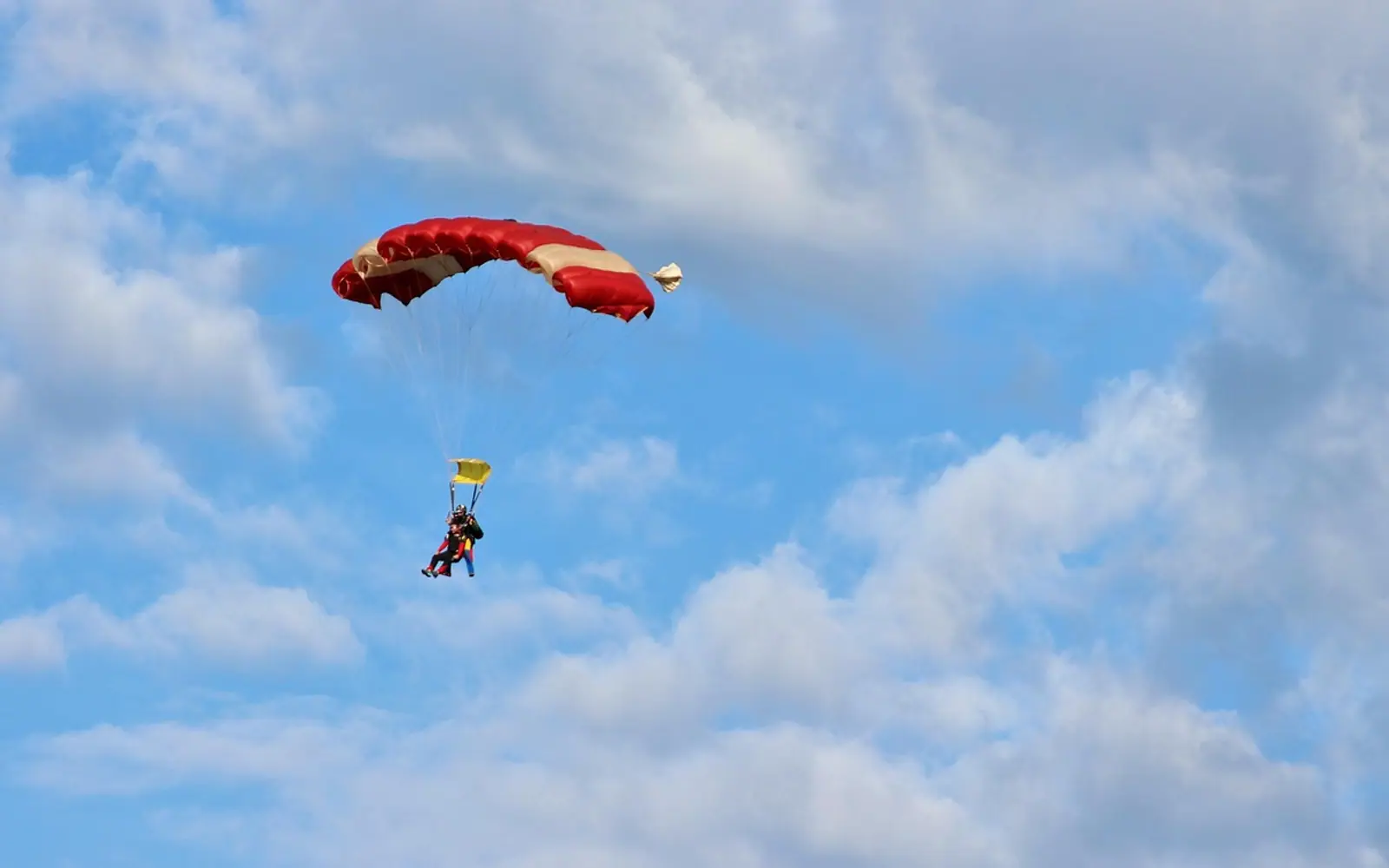
On a first skydive, almost every piece of equipment is provided by the drop zone and checked by staff before you board the aircraft. Even so, understanding what each item does makes the briefing easier to follow and the whole day less nerve-racking. If the sport becomes a hobby, that knowledge also helps when it is time to think about kit of your own.
The rig: harness, container and two canopies
The parachute system, usually called the rig, is the core of the setup. It combines several parts:
- Harness and container. The harness straps around shoulders and legs; the container on your back holds the parachutes. Fit matters, so staff adjust it carefully for each jumper.
- Main canopy. The parachute used on a normal jump. Student canopies are typically larger and more forgiving, which makes steering and landing gentler.
- Reserve canopy. A backup parachute packed and inspected by a qualified rigger on a regular schedule, ready if the main does not open properly.
- Automatic activation device. Many rigs carry a small unit that can deploy the reserve at a set altitude if the jumper has not acted.
Instruments and protective kit
| Item | Purpose |
|---|---|
| Altimeter | Shows height so you know when to deploy; worn on the wrist or chest |
| Audible altimeter | Beeps inside the helmet at preset heights |
| Helmet | Protects the head during exit, freefall and landing |
| Goggles | Keep wind and debris out of the eyes; clear lenses are common |
| Jumpsuit | Protects clothing and can help with body position in freefall |
| Gloves | Useful in colder weather for keeping fingers nimble |
What to bring on the day
Students usually need very little of their own. Comfortable, close-fitting clothes suited to the weather and sturdy trainers without hooks are typical requirements. Leave loose jewellery at home and tie long hair back. Check the drop zone's own list before setting off, since rules vary between centres and countries.
Moving towards your own equipment
Most jumpers continue renting for a good while after qualifying. Buying a rig is a significant decision, and instructors and riggers can advise on canopy sizes suited to your weight and experience. Many begin with smaller personal items, such as an altimeter, helmet and goggles, then add a jumpsuit and eventually a complete rig. Specialist retailers that stock skydiving equipment Europe wide offer a broad selection of new and used gear, which makes it easier to compare models once your instructors have helped narrow down what suits you.
Respecting the process
Skydiving is built on training, checks and routine. Listen closely to the briefing, ask questions until everything is clear and follow the instructions of qualified staff at every stage. Equipment is only as good as its maintenance and the person using it, so keep gear inspected and stored properly. Treated with that respect, the kit becomes familiar quickly, leaving more attention free for the view.
Making it stick
Ways to keep seasonal jobs from piling up
Ideas for turning a long list into a habit that lasts the whole year.
Tie jobs to dates you already know
Changing the clocks or the first school week makes a handy reminder for alarms, filters and descaling.
Keep supplies in one caddy
A single box with gloves, cloths, baking soda and vinegar means no hunting before you start.
Share the list
Pin it inside a cupboard door so everyone at home can tick off a task.
Stop at two
Doing two jobs and stopping keeps the routine pleasant enough to repeat next month.
Got a topic idea?
We read every message.